
18.06.25 - All eyes on central banks
This week is packed with key central bank decisions, keeping investors on edge.
Bank of Japan and Sweden’s Riksbank have already left their interest rates unchanged, in line with expectations.
Tonight, all eyes are on the US Federal Reserve (Fed), where the market broadly anticipates no change in interest rates.
Tomorrow, the Swiss National Bank (SNB) is expected to cut rates by 25bps. However, the SNB has a history of surprises. A deeper cut of 50bps, effectively returning to negative rates, cannot be fully ruled out.
Also on Thursday, the Bank of England (BoE) will announce its decision. Today’s inflation print supports the consensus for no rate change.
Markets: Investors remain cautious, with equities trading sideways on low volume, reflecting a classic “wait-and-see” approach ahead of the policy signals. Same for US dollar currency, commodities and interest rates
My view: Rising geopolitical tensions, fragile trade negotiations, and mounting political pressure—particularly from Donald Trump, who continues to push for lower U.S. interest rates—are adding layers of complexity to central bank decision-making. A rate change at tonight’s meeting would be a major surprise.
Investor attention is on the Fed’s policy statement and protocol. Despite persistent inflation, markets still price in one to two rate cuts by year-end. However, the recent rebound in energy prices could prompt a more hawkish tone from the Fed, potentially catching markets off guard. This increases the risk of a sharp reaction across bonds, equities, and gold. Risk of higher volatility is clearly elevated heading into the announcement.
17.06.25 - China vs. US consumer
China: as released yesterday, retail sales surged by 6.4% YoY in May, well ahead of the expected 5% and accelerating from April’s 5.1%. It marked the fastest pace since late 2023, supported by government subsidies aiming to stimulate domestic demand. However, industrial output growth slowed to 5.8%, slightly below expectations and down from 6.1% in April, reflecting the strain of lingering trade uncertainties and deflationary pressures.
US: In contrast, US retail sales declined 0.9% MoM in May, far worse than the -0.6% consensus and following a -0.1% drop in April. Excluding autos, sales still fell 0.3%. Weakness was broad-based: autos -3.5%, gas stations -2%, restaurants -0.9%. Only online (+0.9%) and furniture stores (+1.2%) showed some resilience.
Markets: US Futures down, China stock indices down after yesterday’s small bounce; US dollar and interest rates little changed; gold slightly positive while major cryptos fall.
My view: Recent consumer data underscores a widening gap between China and the US in consumption dynamics.
For now, China's consumer is rebounding, helped by targeted policy support and still-depressed comparison bases. However, the economic environment remains challenging to maintain stable growth since the second quarter, naming heightened uncertainty in trade policies among factors dragging growth.
Meanwhile, the US consumer is turning more selective, if not outright cautious. After front-loading purchases in March, particularly autos, ahead of anticipated tariffs, May data confirms a pullback. Airlines inform that they are facing weaker travel demand. Tariff concerns, rising energy prices, and cautious consumer sentiment clearly weighed on spending. With inflation-adjusted wages barely moving and geopolitical tensions rising, households are rethinking their priorities.
With the overall situation (high valuations after recent rally) and the escalation in the Middle East area to continue, I remain selective and rather cautious. Expecting some drawdown and higher volatility ahead, I took measures in recent weeks benefitting from falling stock indices and rising volatility.
However, I keep my allocation in China internet and consumer stocks.
In case of positive signs, I will add more exposure in China and buy some global retail stocks which saw lately sharp declines.
13.06.25 - Middle East conflict back in focus
Israel launched a series of airstrikes on Iran early Friday local time, marking a significant escalation in the ongoing tensions between the two nations. Israel confirmed it targeted sites linked to Iran’s nuclear program. Iran’s state media reported multiple fatalities in Tehran, including the death of the commander-in-chief of Iran's Islamic Revolutionary Guard Corps. Additionally, media reports indicate that Iran has launched over 100 drones toward Israel in retaliation.
Markets: oil-prices surged by 7-8%, currently trading up +5%; risk-off and safe haven stance, equity indices declining globally, Swiss franc and Japanese yen have strengthened while US Treasury yields have fallen; Cryptos are deeply in red while gold sees an up-tick.
My view: Amid an already more fragile picture of the global economy outlook, with heightened uncertainties, this conflict adds another layer of risk that undermines the potential for sustained market optimism. If the situation escalates further, oil prices are likely to remain elevated for an extended period. Rising energy costs could intensify inflationary pressures, while simultaneously weighing on global growth, presenting significant headwinds for economic stability.
This scenario would certainly prevent any potential for higher stock prices.
12.06.25 - Deal
Following a high-level meeting in London, the US and China reached a new trade agreement aimed at preserving the fragile truce established in Geneva. President Donald Trump announced that US tariffs will be maintained at 55%, while China will hold its own at 10%. The deal includes the removal of Chinese export restrictions on rare earth minerals and lifts curbs on magnets vital for high-tech and defense industries. It also reopens access for Chinese students to US universities.
Cantor Fitzgerald CEO Howard Lutnick noted the deal's importance in securing supply chains for critical minerals, while Bessent clarified that no ‘quid pro quo’ had been made regarding U.S. high-end chip exports in return.
Markets: Major Asian markets down with Hang Send index -1.36%, European equities down between -0.5% to -1%, US Futures slightly down -0.3%; falling yields on interest rates globally, while US dollar continues to drop; gold price stagnate with other commodity prices; Cryptos see some profit taking
My view: For some, it may be surprising that markets did not cheer the news. But the reality is more sobering. The “deal” essentially confirms that tariffs are not being lifted. Tariffs are being cemented at a slightly lower level. The narrative is being spun as progress, but in fact, it institutionalizes a new baseline of trade friction between the world’s two largest economies. And this will also count for other trade partners which have not yet settled a deal.
To keep in mind, the US is forced to generate income to find a balance on its bill and the gap with financing its debt and lower taxes .
While short-term disruptions may ease, the structural decoupling continues. Investors have priced in a rebound with full normalization. This deal framework should definitely raise red flags.
The euphoria built on hopes of resolution may begin to unwind once investors realize the tariffs are not going away. It’s not a rollback, it's a realignment. And sooner or later, that will be felt in corporate margins, supply chains, earnings guidance as well as economic data like inflation, slowdown labor market.
I took some profit on investments done recently, few days after the ‘Liberation Day’ during market lows. On the other hand I increased my position betting on rising volatility as well as increased my exposure towards falling stock prices in the chip sector. Investors were heavily betting that the export restrictions will be eased with this deal.
11.06.25 - Inflation pressure - not there, yet?
Today’s reported inflation numbers came in lower than expected. The CPI (Consumer Price Index) rose 0.1% for the month of May, below the 0.2% estimate, with an annual increase of 2.4%, below the 2.5% consensus estimate.
Core CPI, which excludes food and energy, rose 0.1% on the month, cooler than the 0.3% expected reading. And the year-over-year increase was 2.8%, below the 2.9% estimate.
Markets: US stock futures initially cheered the softer data with US equity futures surging ahead of the opening. During regular trading hours, major indices gave back some of those gains, hough they remain in positive territory; US dollar weakened alongside falling yields, with the 10-year yield dipping from 4.5 to nearly 4.4%; positive price reaction on gold and cryptos.
My view: The headline inflation numbers may look contained for now, but underlying cost pressures are building and could resurface in the second half of the year.The CPI report delivered a positive surprise, and under normal conditions, this would have triggered a more sustained market rally. Adding to the bullish narrative is the news of a trade agreement between the US and China—potentially easing tensions around critical materials and tariffs. But after the sharp rally in recent weeks, markets appear overbought. Today’s news, while constructive, is no longer enough to fuel another major leg higher. A correction seems both healthy and overdue.
While a broader tariff escalation has been delayed as negotiations are still on-going, the real impact may surface in the coming months as companies preemptively hike prices. With imports from China fell sharply for two consecutive months, there are currently no news on product shortages. But, rising commodity prices, especially in metals and oil, are likely to lead to inflation to some extent.
09.06.25 - New optimism on trade talks
The US and China are set to resume trade talks. Negotiators re-meet today in London for a second round of trade and tariff talks.
Before, Trump accused China to violate the trade deal. The talks follow now a phone call last week between Presidents Donald Trump and Xi Jinping.
The talks aim to resolve issues such as rare-earth exports, tariffs, and restrictions on advanced chip technology.
Meanwhile, Chinese exports to the U.S. fell sharply in May, plunging 34.4% year-on-year, the steepest drop since the pandemic lockdown in 2020.
China exports were up 4.8% in May (est. 5.0%) while imports dropped 3.4% (est. -0.9%).
Markets: China up this morning, while US is trading sideways after a positive opening; Commodities are a clear winner with gold, silver, copper, platinum all extended their recent uptrend; the US dollar edges lower;
My view: Investors seem again rather optimistic on US China talks. Any progress remains tentative.
While the US China talks may continue to keep headline risk temporarily down, the underlying strategic competition remains intact, particularly in the race for critical minerals and technological dominance.
I therefore already increased significantly on April 7th the exposure in commodities as well as mining stocks, adding rare earths and later in May gold exposure, all implemented via ETF.
With the current backdrop and the my view that the race for resources continues bring higher prices, I keep the increased tactical allocation in that specific sector.
Any negative outcome of the latest talks could lead to a sharp drop in overall markets and higher volatility. Especially as overall negotiations and trade deals with different countries seem to stuck. Time is running, either reciprocal tariffs are set on hold or would take effect soon. The market is currently pricing in that deals with all nations will be found and tariff issues are going to be solved. I continue to see high level of risk that the market and investors are going to be disappointed as well as negative economic data will be released soon.
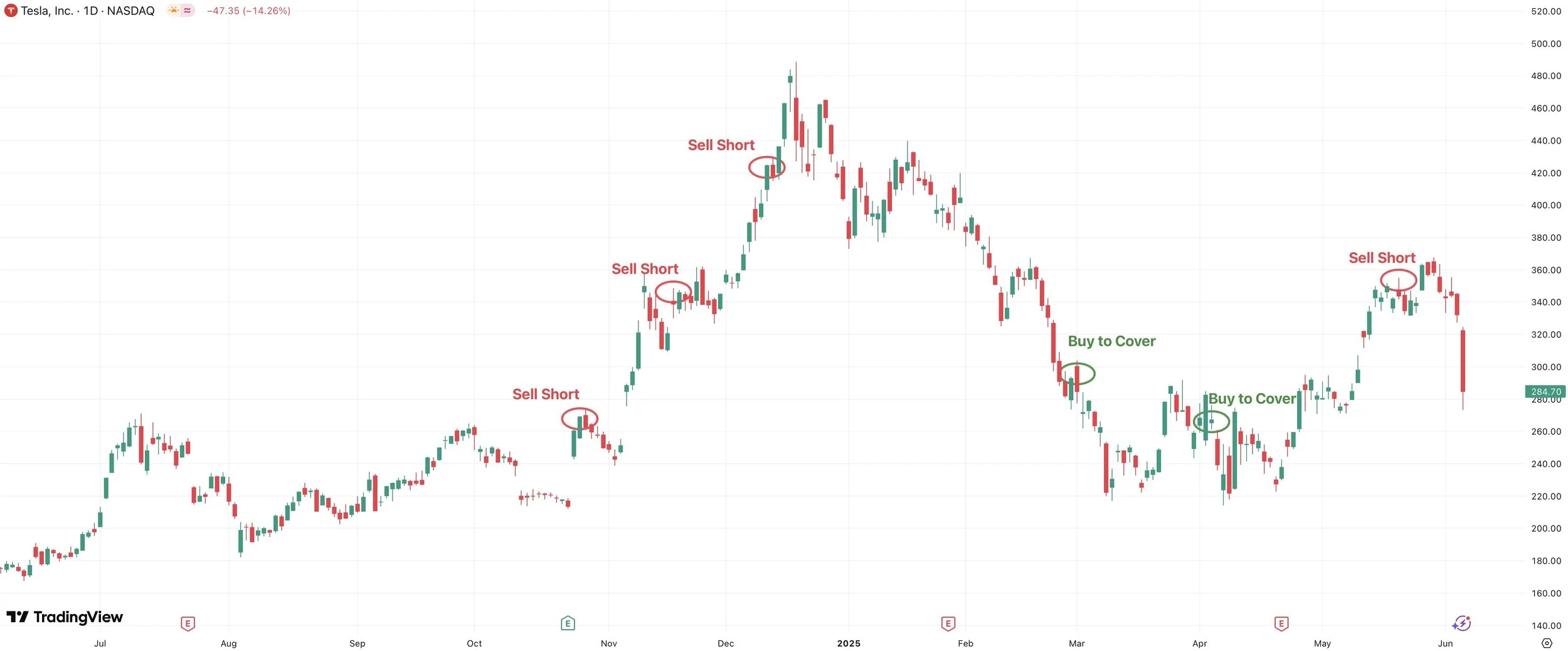
06.06.25 - Trump vs. Musk
The tensions between Donald Trump and Elon Musk appear to be escalating. All started with some background noise. Trump is reportedly frustrated with Musk's growing political influence and refusal to fully endorse him. According to U.S. media reports, Trump has privately criticized Musk’s ambitions. In return, Musk has amplified posts mocking Trump and reiterated that X (formerly Twitter) will not be used as a campaign mouthpiece for any candidate.
Musk used the platform to criticize US debt levels and fiscal mismanagement, topics that intersect with Trump’s legacy and current campaign talking points. “Bankrupting America is NOT ok! KILL the BILL.” Musk posted on X last Wednesday. And added “If the massive deficit spending continues, there will only be money for interest payments and nothing else!”
Markets: Tesla stock slumped, losing 17% in two days, dragging down Nasdaq index yesterday - this morning with a shy rebound
My view: Frankly, I am not surprised to see Trump and Musk clashing. It is a confrontation I anticipated from the very beginning of their brief “collaboration” around the White House. Their egos, ambitions, and platforms were bound to collide.
I have been short Tesla since 20 May 2025, selling the stock at USD 353.63. A move I communicated to ETFMandate Premium Members via the Premium Newsletter.
Tesla’s fundamentals remain weak at this stage, and now political headwinds are intensifying. I am following this feud closely, as it could impact the stock sharply in either direction in the short term.
However, if tensions escalate further, the fallout could extend beyond Tesla, dragging down parts of the broader market, especially if Trump directly targets Musk-led businesses.
Markets continue to ignore the mounting debt challenges the US may face sooner or later, along with the growing warning signs. The latest USD 1.5 trillion spending plan only adds fuel to the fire. This complacency will not last forever. When the sentiment shifts, it could trigger a far deeper market correction.
This feud is more than just a personal spat. It has the potential to reshape also the political landscape. The next flashpoint? The unfolding battle over control of the social media narrative. What’s next in the battle between the Trump and Musk over the social media platforms? This story is far from over.
05.06.25 - Eyes on ECB - rate cut expected
Today at lunchtime, the European Central Bank (ECB) will announce its latest interest rate decision. Markets widely expect a 25 basis point cut, bringing the key rate down to 2.00%. This would mark the ECB’s eighth rate cut in the current cycle since June 2024.
Markets: European equity indices are slightly up this morning with the DAX trading near its all-time high (reached yesterday); European interest rates are moving sideways as well as the Euro trading slightly above 1.14 against the dollar.
My view: A 25bps cut is fully priced in, so a market driver could be the ECB’s forward guidance during the press conference when President Christine Lagarde comments on the economic outlook, inflation expectations, and maybe giving a hint on the future rate path.
Markets have run up significantly in recent weeks, leaving room for a potential correction, especially if the ECB’s tone disappoints or fails to confirm dovish expectations.
Meanwhile, yesterday’s Fed minutes already pointed to signs of a weakening US economy. As previously noted, markets continue to shrug off negative data. Therefore the critical question is, how much longer?
04.06.25 - Weaker job report and service sector data - ignored
Today’s ADP employment report revealed a sign of weakness in the US labor market. The private sector added only 37’000 jobs in May. This is well below expectations of 115’000, following the slowing trend since the start of the year and marking the slowest pace since March 2023.
At the same time the sentiment in the US services sector unexpectedly deteriorated in May with the Service PMI at 49.9 and below the 50 threshold, now indicating a potential contraction (consensus estimate 52).
Markets: DAX with new all-time high, US indices up led by Tech stocks +0.3%, US dollar weaker with declining interest rates, gold +0.6%, Swiss Franc and Japanese Yen stronger against major currencies (safe haven demand?)
My view: Despite weak labor data, signals through leading indicators of potential economic weakness, now even in both, the manufacturing and the service sector, markets remain remarkably resilient. To my surprise, investor sentiment shows no real vulnerability, highlighted by the German DAX hitting fresh all-time highs today.
This market strength, in the face of multiple headwinds like geopolitical risks, unresolved trade disputes, and historically high debt levels, suggests that momentum-based strategies continue to dominate. Algorithms appear programmed to keep buying, irrespective of the economic backdrop.
We are witnessing a growing disconnect between markets and fundamentals, an environment driven more by speculation than by earnings or economic reality. investors leverage levels have surged again, now matching the extremes last seen before the 2001 dot-com bust and the 2008 starting subprime crisis. That, to me, is a major red flag.
Yet, as history has shown, periods of irrational exuberance can persist far longer than expected. A high number of today’s rather new market participants have never experienced a prolonged downturn. Their confidence in rapid recoveries, reinforced by past aggressive central bank interventions, could make the eventual correction all the more painful. When the tide turns, the “young gambling crowd” may face a reality check. I suspect it will take an unprecedented catalyst to bring this cycle to a more severe and lasting end.
03.06.25 - Leading indicators - no rosy outlook
The latest global manufacturing PMI (Purchase Manager Index) data for May 2025 paints a cautious picture, with signs of stabilization in parts of Europe but notable weakness in Switzerland, the US, and China, largely due to escalating trade tensions and tariff impacts.
Purchasing Manager Index: based on a monthly survey of supply chain managers across multiple industries, covering upstream and downstream activity. The Purchasing Managers' Index can range between 0 and 100, with a number over 50 citing expansion and under 50 noting contraction.
In the Eurozone the Manufacturing PMI edged up to 49.4 in May from 49.0 in April, marking the slowest pace of contraction in nearly three years. This improved number was mainly driven by Spain's manufacturing sector returning to growth in May, with the Manufacturing PMI rising to 50.5 from 48.1 in April. However, Germany's manufacturing sector continued to contract, with the PMI slightly decreasing to 48.3 in May from 48.4 in April, marking the 35th consecutive month below 50.
Fort the export focused country Switzerland, the manufacturing PMI plummeted to 42.1 in May from 45.8 in April, the lowest reading since late 2023. The decline reflects collapsing production, dwindling orders, and escalating trade barriers. Over half of surveyed firms cited trade barriers as a core constraint, signaling significant challenges for the sector.
China's manufacturing sector contracted in May, with the Caixin/S&P Global Manufacturing PMI falling sharply to 48.3 from April's 50.4, the lowest in 32 months.
The United States manufacturing sector showed mixed signals in May. The S&P Global Manufacturing PMI rose to 52.3, indicating expansion, while the ISM Manufacturing PMI registered at 48.5, suggesting contraction. The divergence reflects varying assessments of the sector's health amid ongoing trade tensions and tariff impacts.
Markets: Global equities do not show big reaction on these numbers: China up this morning, US indices closed higher yesterday, Europe trading almost unchanged; long-term interest rates, after latest rally in May on the way to decline further with the 10-year US Treasury moving towards 4.4%, gold in consolidation after yesterday’s strong move.
My view: This could just be the beginning that the effects of trade tensions and tariffs are about to manifest in the manufacturing data. The strong figures previously observed were likely influenced by front-loading activities, such as Switzerland's Q1 GDP boost from increased pharmaceutical exports to the US, growing 2% year-on-year basis. However, with investments being put on hold and deliveries now missing in this second quarter, the underlying economic challenges are becoming more apparent.
For such a scenario, equity indices ran too far up, even with potential interest rate cuts. Investors are increasingly hopeful that the Federal Reserve (Fed) might initiate interest rate cuts sooner than the anticipated September timeline. However, some analysts caution that the Fed's commitment to its 2% inflation target may lead to a more measured approach, especially given the potential inflationary impact of recent tariff policies.
01.06.25 - Mounting Uncertainties
Legal, economic, and political uncertainties are intensifying under President Trump.
Just one day after accusing China of violating a key trade agreement, Trump announced a doubling of tariffs on imported steel and aluminum, from 25% to 50%, effective June 4.
Tariffs continue to dominate headlines, with hardly a week passing without a new development. This week, the issue moved into the courts. Legal challenges now question the legitimacy of reciprocal tariffs and whether the authority to impose them lies with the President or Congress. Both parties have until June 9 to present their arguments.
At the same time, June will be pivotal for global monetary policy. Decisions are due from the ECB, the Federal Reserve, and the Bank of Japan. Meanwhile, the Swiss National Bank could surprise markets with a reintroduction of negative interest rates.
Inflation remains persistently high in both Europe and the US, and new tariffs may add further upward pressure.
Markets: Weekend futures across Asia, Europe, and the US are pointing lower. Cryptos are also trading lower, suggesting a weak opening to the new trading week.
My view: Markets are navigating a sea of uncertainties. Yet, despite escalating trade tensions and a steady stream of negative news, investor sentiment remains remarkably upbeat. The market continues to shrug off potential downside risks, especially on the tariff front.
A key reason: many investors are still betting on the so-called “TACO” trade - ”Trump Always Chickens Out”. This strategy is built on the assumption that Trump may posture aggressively but ultimately softens or reverses his stance. That belief helped fuel one of the strongest months for US equities in May, the best since November 2023.
I chose not to follow that speculative crowd. From my perspective, the economic impact of recent policy decisions is already more severe than markets are pricing in. Valuations appear increasingly stretched. The real question is: what will break the current euphoric mood? And how long will speculators continue to chase elevated valuations in the face of mounting structural risks?
30.05.25 - Court reinstates tariffs - for now
On Wednesday, the U.S. Court of International Trade in New York ruled that nearly all of the tariffs imposed under Trump’s invocation of emergency economic powers were unlawful.
However, by Thursday, the US Court of Appeals in Washington temporarily overturned the New York ruling, granting only a provisional stay. The appellate court has now called for all parties involved to submit further legal arguments by June, signaling that the final verdict on the legality of Trump’s tariffs remains unresolved.
Markets: Equity indices continue with wider swings, Europe up today, while US Futures are trading flat, Asia in red this morning; Cryptos trading down, while US dollar is up and gold price trading around USD 3’300/os level.
My view: Tariffs remain a dominant topic, with uncertainty intensifying following the latest legal developments. As anticipated in my previous post, published yesterday, the market euphoria proved short-lived.
The rapid reversal of the court’s ruling underscores the ongoing legal and policy uncertainties surrounding US trade measures.
This back-and-forth creates significant challenges for companies operating globally, making it difficult to plan ahead.
Until a clear legal outcome is reached, the uncertainty around tariff policy will likely continue to weigh on investment decisions, many of which are now being set on hold and for sure being delayed. This hesitation will sooner or later show up in economic data and, in turn, will effect market sentiment in a negative way.
29.05.25 - US court stops tariffs
The US Court of International Trade has blocked the implementation of President Donald Trump’s so-called “Liberation Day” tariffs. The court ruled that, under the US Constitution, only Congress has the authority to regulate trade with foreign nations. The president’s emergency powers to protect the US economy do not override this constitutional mandate. By imposing blanket tariffs on imports from countries with trade surpluses against the US, Trump was found to have overstepped his legal authority.
The Trump administration immediately appealed the ruling within minutes of its release.
Markets: Global markets reacted positively. The US dollar gained, gold remained flat, and interest rates moved higher, with the 10-year Treasury yield rising above 4.52%.
My view: Markets remain highly news-driven, and the risk-on reaction and relief is not unusual. With the tariff story now in the hands of lawyers, market swings are likely to continue, depending on legal outcomes.
Trump's ambitious strategy to fund tax cuts through tariff revenues may be in serious jeopardy. As a result, US debt could soon return to the spotlight, a potential headwind for markets and overall risk sentiment. Therefore, this latest rebound could prove short-lived.
28.05.25 - All eyes on Nvidia
Nvidia has just released its fiscal Q1 2025 earnings, reporting revenue of USD 44.1 billion, a 12% increase from the previous quarter. This figure is slightly above the anticipated USD 43.3 billion. However, the company reported EPS of USD 0.81, below the analysts expected of USD 0.93, potentially due to the USD 5.5 billion inventory write-down stemming from US export restrictions on its H20 chips to China
Markets: No big market reaction so far; Nvidia +2.5% in after hours trading, Nasdaq Futures 100 points higher reflecting this move, however, negative for the day.
My view: Seems the market puts the focus on the revenues and not earnings figures as there is a slight positive reaction.
I keep my cautious stance on the AI sector. While Nvidia's growth story remains impressive, the current valuation seems to reflect high expectations for sustained AI demand. The impact of geopolitical factors, such as the export restrictions to China, underscores the uncertainties facing the company. Investors should remain vigilant. The investors’ sentiment can shift quickly away from the AI euphoria and a sell-off in the most crowded stocks like Nvidia and the Magnificent 7 can lead to losses very quickly.
27.05.25 - Long vs. Short - The winner is…
European tariffs have been put on hold for another month, temporarily easing tensions and allowing more time to negotiate a trade deal. Without this extension, the tariffs would have taken effect on June 1.
Meanwhile, Swiss watch exports to the US surged by 149% in April. This sharp increase is largely the result of front-loaded shipments triggered by the Trump administration’s tariff announcements in early April. Excluding the US, total watch exports would have declined by 6.4% in the reporting month.
In New York, the number of investors betting against the market continues to grow. According to Goldman Sachs, 2.3% of the S&P 500 market cap is now positioned for lower prices, the highest level since fall 2019.
Markets: US and UK markets remained closed yesterday and are attempting to recover Friday’s losses. Interest rates have pulled back from recent highs, the US dollar is gaining back som ground, and cryptocurrencies are trading sideways following last week’s bounce. Gold is slightly lower but continues to trade above USD 3’300/oz.
My view: With short interest rising, the risk of a short squeeze is growing, especially if markets continue to climb, driven by selective optimism and the tendency to focus on positive data points.
Still, I align more with the short side. Markets appear to underestimate the broader risks triggered by tariff-related uncertainty and a potential halt in the investment cycle. The strong macro data for April should be interpreted with caution, as much of it likely reflects front-loaded activity in anticipation of policy changes.
21.05.25 - Shaking off bad news - Markets ride the momentum wave
Since this year’s low on April 6, markets have known only one direction: up. The sharp V-shaped rebound was primarily driven by inflows from retail investors eager to seize the opportunity to buy equities on lower prices. At the same time, volatility has faded, returning to lower levels.
However, this upward momentum stands in contrast to the macroeconomic backdrop, where negative headlines persist and uncertainty remains high. Warnings from both the economic and corporate fronts have been largely ignored. Notably seen in the market's muted reaction to the recent US credit rating downgrade, where losses were quickly erased.
The market momentum seems to continue, for how long?
Momentum investing: an investment strategy aimed at purchasing securities that have been showing an upward price trend or short-selling securities that have been showing a downward trend.
Markets: Equity markets see a bit of a consolidation today, interest rates going up on the long end, US dollar weak while gold is up. Cryptos sideways today with Bitcoin near all-time highs.
My view: Momentum investing, today’s market behavior seems increasingly driven by such strategies. My impression is that artificial intelligence and algorithmic trading tools are reinforcing these trends, attracting a higher number of speculators and amplifying market movements.
Is this becoming the new market regime?
Meanwhile, the tariff issue seems to have faded from attention. Many investors act as if the trade conflicts have been fully resolved, despite the reality that only two limited deals have been struck, one with the UK and a 90-day arrangement with China. Several tariffs remain in place, while key measures have merely been postponed until the end of June.
How long until the tariff discussion resurfaces and disrupts market complacency?
17.05.25 - Next Trigger - US debt
The US loses its last AAA credit rating. Yesterday evening, after market close, Moody’s announced the downgrade of the United States' sovereign credit rating, citing the growing burden of financing the federal deficit and the rising cost of rolling over existing debt amid high interest rates.
This move marks the end of an era: Moody’s had been the last of the “Big Three” rating agencies still holding the US at AAA (best Now it aligns with its peers—Standard & Poor’s cut the rating to AA+ back in August 2011, and Fitch followed in August 2023 with the same downgrade.
AAA rating: is the highest possible credit rating assigned by rating agencies like Moody’s, S&P, or Fitch. It signals that a country (or company) has an extremely strong ability to repay its debt, with minimal risk of default. In simple terms, it's like a perfect credit score for governments, indicating top-tier financial reliability and trustworthiness in global markets.
Markets: markets are closed - however seen, after-hours trading already reflected some nervousness with futures down and interest rates up, US dollar down while gold price moved higher. Crypto prices fall during weekend trading.
My view: The timing of Moody’s downgrade, just after market close and ahead of the weekend, is no coincidence. Releasing the decision late on a Friday likely aims to avoid an immediate, sharp market reaction. Investors now have the weekend to digest the news, with the first real test coming Sunday night when futures trading resumes.
The US is running a massive budget deficit as interest costs for Treasury debt continued to rise due to a combination of higher rates and more principal debt to finance. A scenario which is not sustainable and wich can not run endlessly.
Moody’s was the final holdout. With this move, the US has now lost its AAA rating from all major rating agencies. I still well remember the downgrade by S&P on August 1st, 2011, during Switzerland’s National Day and Swiss stock market closed, my options not tradable and worthless the next day, as global financial markets tumbled and investor confidence took a serious hit.
While today’s downgrade may not trigger the same level of panic in the short-term, it could very well disrupt the current wave of market euphoria. Investor sentiment has already shown signs of fragility, especially in April, when a broad sell-off in US Treasuries causing higher yields and a weaker dollar, raised fresh concerns about fiscal discipline. With this downgrade reinforcing those fears, markets may open next week in a far more cautious and volatile tone.
16.05.25 - Next Trigger - the Consumer
US consumers seem to become increasingly worried. The index of consumer sentiment dropped to 50.8, down from 52.2 in April, in the preliminary reading for May. Year-ahead inflation expectations rose to 7.3% from 6.5% last month, while long-term inflation expectations ticked up to 4.6% from 4.4%. The rise likely reflects growing concerns that recently announced tariffs will drive prices higher.
The CFO of Walmart addressed in an interview yesterday, that 30% tariffs are still to high, even with the recently announced trade deal to lower duties on imports from China to 30% for 90 days. You’ll begin to see that, likely towards the tail end of this month, and then certainly much more in June.
Markets: US indices continue their 5 day winning streak, US dollar up, while interest rates trading sideways between 4.4 to 4.5%.
My view: The US consumer is a critical pillar of the economy, accounting for nearly 70% of GDP through personal consumption. A sharp decline in consumer sentiment, paired with rising inflation expectations, is a clear warning signal. It suggests that households are increasingly concerned about their purchasing power, especially in light of the renewed tariff tensions. I share the view that expecting no price increases would be rather unrealistic.
If these concerns begin to curb consumer spending, it could weigh heavily on economic growth in the months ahead. One key question is whether consumers have already front-loaded their purchases in anticipation of higher prices, something we’ll only know in the near term.
For now, markets are completely ignoring these warning signs, which is typical behavior in phases of excessive market euphoria.

14.05.25 - Next trigger - the sentiment
Pure optimism is back in the markets. This is not only reflected by a number of stocks reaching new all-time highs but also confirmed by sentiment indicators. The CNN Fear & Greed Index is now just a few points away from the “Extreme Greed” level. An impressive turnaround considering it was still in “Extreme Fear” territory as recently as April 22, just a few weeks ago.
Markets: Major indices continue their rally, yet signs of exhaustion are emerging. While momentum remains intact, the pace is starting to slow, suggesting that markets may be losing steam after the recent surge.
My view: Momentum is clearly driving the market. After the S&P 500 hit a low on April 8 and a secondary dip on April 21, the index staged a sharp V-shaped rebound, even now turning positive for the year. However, to me, this rebound seems disconnected from the underlying economic reality.
With current momentum, markets are again not just rallying, in my view, they are overshooting, with several indicators now signaling overbought conditions.
I did not anticipate such a strong rally and was positioned more defensively, expecting further downside. In the current environment, I see little justification to adjust that stance. The recent rebound appears largely sentiment-driven, and I do not see sufficient positive catalysts to sustain this rally much further from here.
The sentiment index can be seen as a contrarian indicator: such extreme optimism is often a reliable warning sign, historically marking good moments to reduce risk or take profits.
14.05.25 - Next trigger - not the inflation
Yesterday’s inflation report came in below expectations. The US Consumer Price Index (CPI) rose by a seasonally adjusted 0.2% in April, bringing the annual inflation rate down to 2.3%, its lowest level since February 2021 and below the forecasted 2.4%. Core CPI, which excludes food and energy, also increased 0.2% month-over-month, with the year-over-year rate holding steady at 2.8%, slightly below the expected monthly increase of 0.3%.
Markets: Markets reacted positively with tech stocks leading the gains. The Nasdaq jumped 1.5%, US Treasury yields moved higher, with the 10-year yield approaching the 4.5% mark.
My view: Markets had braced for a hotter inflation print in April, given that it was the month when new tariffs were announced. However, most of these tariffs were ultimately put on hold, and many trade deals were settled in advance. As a result, a large volume of goods had already been pre-loaded in March, cushioning any immediate price impact.
A key contributor to the softer inflation reading was the sharp drop in energy prices. Crude oil fell from USD 72 to USD 58—an almost 20% decline. That said, in May, oil has already rebounded by nearly 10%. Should this upward trend continue or even persist at current levels through month-end, it will likely exert upward pressure on May’s inflation print.
At the same time, many macroeconomic indicators are currently being distorted by short-term effects. These temporary dynamics must be carefully considered when interpreting the latest data releases.
Last but not least, the April inflation data reinforces the Federal Reserve’s “wait-and-see” stance. With inflation still above target and no signs of urgency, rate cuts in the near term remain unlikely.